



Home Decorative Lighting
What is Home Decorative Lighting?
Indoor lighting refers to the artificial illumination of indoor spaces such as homes, offices, and other buildings. It is designed to provide sufficient light for people to see and perform various activities indoors, regardless of the natural lighting available.



Advantages Of Home Decorative Lighting
1. Ambiance Creation + Style Matching, Enhancing Home Quality
Interior decorative lighting is the "finishing touch" to a space's style, and can be flexibly matched according to home decor style: minimalist acrylic lamps for Nordic style, wrought iron kerosene lamps for retro style, crystal string lights for light luxury style, or ambient light strips for Instagrammable style – quickly reinforcing the spatial tone. It also supports color temperature (warm light/cool light/RGB) and brightness adjustment. Warm light in the living room creates a cozy atmosphere for entertaining guests, cool light in the study enhances concentration, and soft light in the bedroom aids sleep, allowing each space to match different scene needs and easily create a high-value, warm home atmosphere.
2. Safe and Environmentally Friendly + Eye Protection and Energy Saving
Using low-voltage drive (12V/24V) and fire-retardant materials, it has passed RoHS environmental certification, free from formaldehyde and heavy metal pollution, especially suitable for families with elderly people and children. The LED light source is flicker-free and free from blue light hazards, the light is soft and not dazzling, and prolonged use does not easily cause eye fatigue, protecting the eyesight of family members. In addition, the LED light source saves more than 80% energy and has a lifespan of up to 50,000 hours. Using it for 8 hours a day allows for stable use for 17 years, reducing electricity costs and the hassle of frequent lamp replacement, balancing environmental protection and economy.
3. Convenient Installation + Flexible and Versatile, Adapting to Diverse Scenarios
No complicated wiring is required, supporting tool-free installation: adhesive light strips can be directly attached to the TV background wall or wardrobe edges; hook-type string lights can be wrapped around curtains or bookshelves; magnetic wall lights can be easily removed and moved at any time, making it easy for renters to renovate. Some models support rechargeable design, freeing you from the constraints of power outlets, allowing for flexible switching between different spaces such as the living room, bedroom, and dining room, and even for holiday decorations and party arrangements. One person can complete the installation and storage, adapting to various temporary scene needs.

4. Smart Control + Personalized Customization, Unlocking a Convenient Experience
Integrating smart technology, it supports remote control, mobile app, or voice control (compatible with Alexa/Google Assistant), allowing you to adjust brightness, switch lighting modes (breathing light/gradient/flashing), and set timers without getting up – a boon for the lazy! Some products support personalized customization: the string light length can be cut, the lampshade pattern can be printed with a logo/photo, and the light effect can be selected (starry sky projection/water ripple), meeting users' needs for "exclusive lighting." Whether creating an Instagrammable spot or commemorating special days, it showcases individuality.
5. Multifunctional Integration + Long-lasting Durability, Excellent Value for Money
Breaking away from single lighting functions, it achieves a three-in-one combination of "lighting + decoration + practical functions": the aromatherapy lamp combines lighting and aromatherapy effects, aiding sleep and reducing stress; the night light has a USB charging port for temporary phone charging; the induction wall lamp automatically lights up when someone passes by, suitable for entrances, corridors, and other scenes. The lamp body uses high-transparency acrylic, solid wood, anti-rust iron art, and other high-quality materials, and is treated with waterproof sealing, making it suitable for humid environments such as bathrooms and kitchens. It is not easy to fade or deform, maintaining good condition even after long-term use, offering far better value than ordinary lamps.

Why Choose Us


Application Of Home Decorative Light
1. Table Lamp: Core Lighting for Desks/Workstations
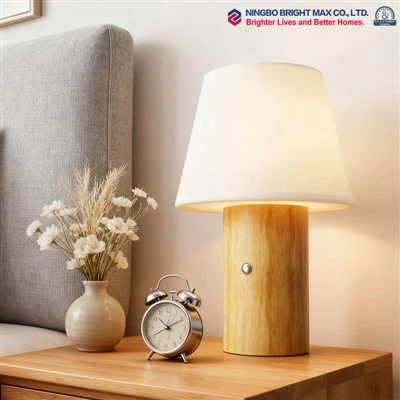
Suitable for study rooms, bedside reading in bedrooms, home offices, or children's rooms for homework. Desk lamps provide focused lighting, precisely illuminating books, computer screens, or work surfaces, preventing scattered light from affecting concentration. Features include adjustable lamp arms and color temperature settings (3000K warm light for eye protection, 6000K cool light for alertness). Students can use warm light to reduce eye strain while studying, and cool light to improve clarity when working on documents. Some smart desk lamps support brightness memory and timed rest reminders; using them in children's rooms can also cultivate regular study habits, making them an essential desk lamp that balances practicality and eye protection.

2. Motion Sensor Light: Convenient Lighting for Entrances/Hallways/Kitchens
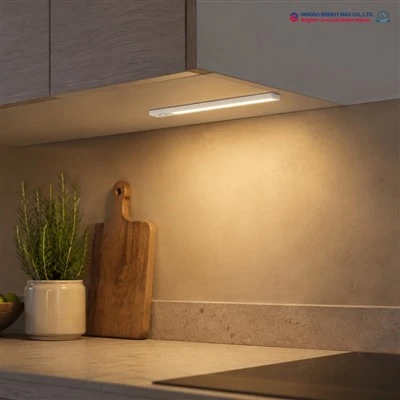
Designed specifically for high-traffic areas where manual switching is inconvenient, primarily used in entrances, hallways, stairwells, under kitchen cabinets, and inside wardrobes. In motion-sensing mode, the light automatically turns on when someone passes by and turns off after a delay, completely solving the problem of finding switches at night, entering the house, or retrieving items from wardrobes; kitchen cabinet models can be embedded under the countertop to illuminate the chopping and washing areas, avoiding shadows; wardrobe models have built-in sensors, lighting up when the door is opened, making it easy to find clothes. The cordless, rechargeable design is suitable for rented apartments or areas without power outlets, offering easy installation and energy saving, making it an "invisible helper" for improving home convenience.

3. Night Light: Sleep-Aid Lighting for Bedrooms/Children's Rooms/Bathrooms
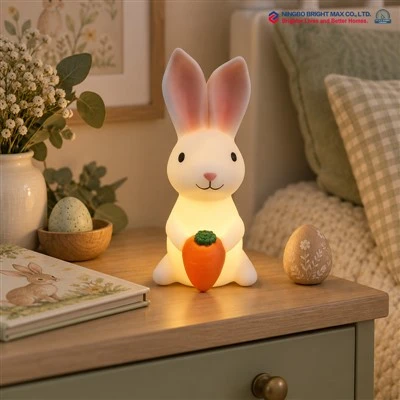
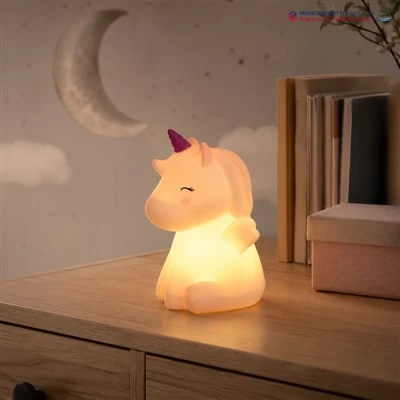
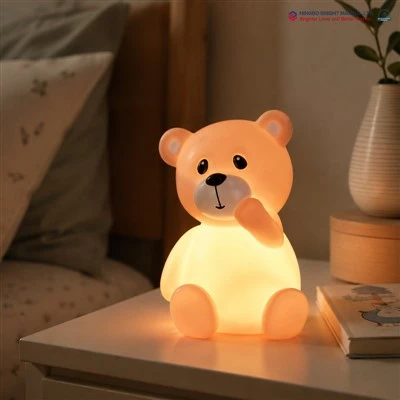
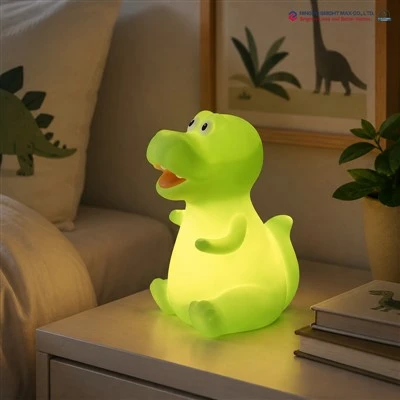
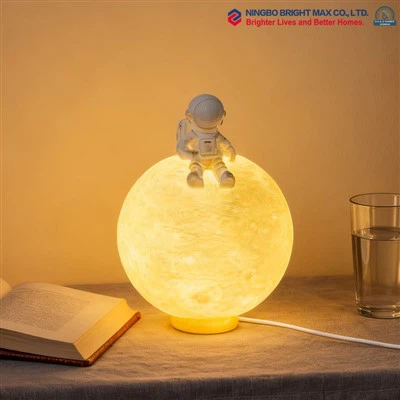
Featuring "low brightness and soft light," primarily used for nighttime lighting in bedrooms, children's rooms, and bathrooms. In bedrooms, the warm, soft light is not dazzling, eliminating the need to turn on the main light at night, preventing strong light from disturbing family members' sleep; children's room night lights often feature cartoon designs, with star projection and breathing light modes to alleviate children's fear of the dark and help them sleep peacefully; for bathroom installation, waterproof models can be directly attached to the wall, illuminating the toilet and sink area, preventing bumps and falls in the dark. Some night lights support timed shut-off, brightness adjustment, and even aromatherapy functions, combining sleep aid, lighting, and ambiance creation, making them essential lighting fixtures for enhancing nighttime home safety.

4. Gaming Lights: Exclusive Ambient Lighting Scenes for Gaming/Live Streaming
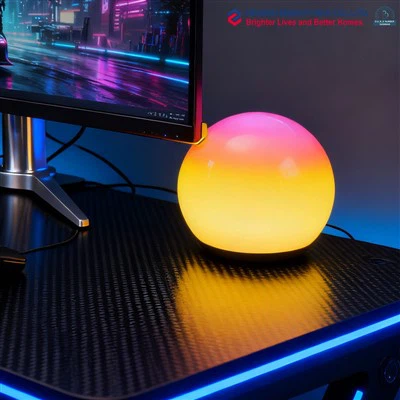
Designed for the specific needs of esports players and live streamers, these lights are used in gaming rooms, live streaming studios, and other similar spaces. The lights are often long and rectangular, and can be hung above the monitor or placed on the desk, providing even ambient light to reduce screen glare and eye strain, preventing fatigue during long gaming or streaming sessions; they support RGB full-color adjustment and various dynamic lighting effects (breathing, gradient, synchronized with game rhythm), allowing users to customize colors and modes via remote control or mobile app, creating an immersive gaming atmosphere; some high-end models support screen color matching, synchronizing the light color with the game screen to enhance visual impact; additionally, the cool light mode improves concentration, while the warm light mode is suitable for live streaming chats, combining practical lighting and ambiance creation, making them a stylish and functional addition to gaming rooms and live streaming setups.

Material of Indoor Light
Cement
Cement is highly plastic and decorative. Lampshades made of cement have various shapes and unique styles, which are suitable for industrial-style decoration.
Metal Material
Metals are widely used in manufacturing lights, especially for LED lights. Materials with good corrosion resistance, such as copper, and stainless steel, can be used as outdoor lamps. Here I list 4 common types of metals for you to choose from.
Copper
Copper is highly malleable, and can be made into many different shapes, such as petals, geometry, and lines. And its durability is also high. Many buyers use it to make garden light fixtures for decoration. In this way, even if there is rust, many people think that it can mix with the surrounding environment without compromising the aesthetics.
Brass
Since brass is a copper alloy, it also has the advantages of copper, such as good durability. Brass does not attract dust easily, so it doesn’t need frequent cleaning or maintenance. It can fit almost any home style, such as retro style, Nordic style, etc.
Stainless Steel
Stainless steel covers a diverse range of steel alloys. Although the properties of different stainless steel alloys vary widely, they all have fairly high strength and high-temperature resistance. Since it is also not prone to rust, many buyers use it for bathroom lighting. 201 and 304 stainless steel are the most common types.
Aluminum
Aluminum is easily processed into various shapes, and it is lightweight. Because pure aluminum is too soft, most buyers will choose to use aluminum alloy to make the lamp shell, which then has a higher hardness. Aluminum also has good heat dissipation, suitable for making LED lamp shells to prolong their service span. Furthermore, the price of aluminum is lower than that of many other metals, such as copper, and stainless steel.
Glass
The transmittance of glass is good, which can maximize the lighting effect. It is also highly malleable, and can be made into different textures and colors. This kind of material will not appear yellowing and fading after a long time. And it is easy to clean and maintain, suitable for homes and entertainment places.
Plaster
The plaster feels fine and smooth. It can be used to create various complex and delicate shapes. It also has stable performance that is not easily affected by thermal expansion. Currently, plaster lights are popular, which can be directly embedded into the wall, allowing the lamp and the wall or ceiling to blend perfectly, enriching the aesthetic of the space.
Ceramic
Ceramics are very suitable for making decorative lampshades for floor lamps and pendant lights. It feels smooth and can be processed into various colors and glazes. You can also paint various patterns on the surface to create exquisite styles. If with higher requirements, you can use porcelain produced in Jingdezhen, which is highly delicate in workmanship and style. Of course, the price will be higher.
Fabric
Fabric comes in a wealth of different materials, such as cotton, silk, parchment, marbled paper, linen, etc., and each has its own special qualities. The texture of the fabric is soft and easy to shape, making it a great decorative element that is well-suited in bedrooms or dining rooms.
You can also adjust the light transmission and color of the fabric based on its thickness, color, and even coating, so that the lighting is softer and less harsh on the eyes. Another advantage of fabric is that it is durable and easy to clean, and most can be washed directly in a washing machine. However, its disadvantage is that it is relatively flammable.
Crystal
Crystal is clear and transparent, with excellent light transmission and oxidation resistance. It is also highly resistant to high temperatures and wear. Lighting fixtures made of crystal have exquisite and fashionable designs, and they are often used in high-end places such as villas.
Crystal is quite expensive. Nowadays, most of the crystals used on the market are artificially made, and if you use natural crystals, the cost will be even higher. Please note that in today’s market, glass is often used to imitate crystals.
Acrylic Plastic Material
Plastic is lightweight and simple in processing, usually used for Indoor Light. The disadvantage is that it ages faster, easy to deform when heated.
The best plastic is acrylic. Even if acrylic is exposed to the natural environment for a long time, its performance is still stable, and not easy to age, deform or break. Its transmittance can reach more than 92%, and it is easy to be processed. The surface can be treated with spray painting, silk screen printing, coating, and other techniques. So it suits a wide range of products, such as household lighting, commercial lighting, creative lights, smart lighting, etc.
Maintenance Tips for Indoor Light
Keep spares on hand
Keep light spares on hand to ensure color and brightness uniformity when you need to replace any bulbsAnd make sure they're the right bulbs. It can be tempting to save money by purchasing just what you need, but you'll eliminate having an unsightly mix of color temperatures down the road if you order extras of the same model number.
In addition to normal and expected end-of-useful-life replacements, the lifespan of some lighting technologies can inadvertently be reduced by running them at higher voltages than they're rated for, exposure to cold, heat and vibrations, and frequent cycling (turning the light on for a short time and back off). Make it easy to replace old or faulty lamps by keeping spares in stock.


Don't wait for burnout
The light output of any lamp gradually decreases over time. You may not be consciously aware of this slow reduction in brightness, but the dimming lights can lead to increasing eyestrain, and even contribute to safety issues. Don't wait for your bulbs to burn out before replacing them. Use their rated lifespan and lumen depreciation rate as a guide. For example, older metal halide lamps lose about 30-50% of their light over the course of their rated hours. If you don't want your area to be half as lit as it started out, plan to replace those bulbs before the end of the rated life. LED and fluorescent lights have a much longer lifespan and much slower lumen depreciation.
Upgrade to a longer-life lamp
Businesses can go through incandescent lights every few months. Fluorescents can make it a year or so. High-intensity discharge (HID) lighting extend use a bit longer—but the real winner is LED lighting, which offers, on average, a 50,000-hour operating lifespan. Replace your existing bulbs and lamps with LED, and you won't have to worry about them again for 5, 10, or nearly 20 years, depending on how many hours a year you run those lights. LED bulbs also have the advantage of being unaffected by vibrations and colder temperatures.
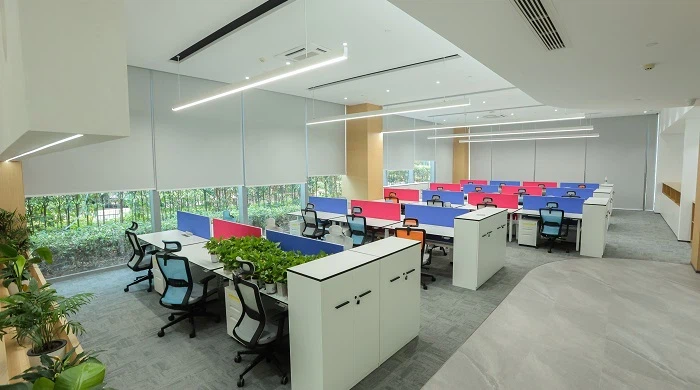
While you're looking at your lighting maintenance program, it can be a good time to look at your overall lighting and whether it's meeting your business's needs. Make note of any area where lighting can be improved in the interests of preventing injuries, increasing security, improving employee productivity, and making your public areas more appealing. LED lighting offers many unique and flexible lighting solutions that you may not have thought of, from LED panel lights to magnetic light strips.



FAQ
Q: 1.What are the colors of indoor lighting?
2000K-3000K: warm light with hints of yellow.
3100K-4500K: bright, neutral white light.
4600K-6500K: bright blue-white light (daylight = approx. 5200K)
6500K and up: very bright, bluish light.
Q: 2.Which light is best for house?
Q: 3.What color light is best for indoor lighting?
Q: 4.What lights look good in living room?
Q: 5.What are interior lights called?
Q: 6.What are the 4 types of light?
Q: 7.What lights brighten a dark house?
Q: 8.What are the 3 traditional lights in a lighting setup?
Q: 9.Do LED lights get hot?
Q: 10.What are the 7 types of light?
Q: 11.What are lights in bedroom called?
Q: 12.What are lights on the floor called?
Q: 13.What are moving lights called?
Q: 14.hat are your front lights called?
Q: 15.hat is the average life of an LED light?
Q: 16.Which kind of light source should not be used in homes?
Q: 17.What are the 6 categories of light called?
Q: 18.What is general lighting?
Q: 19.What is the most common basic lighting setup?
Q: Can I leave LED lights on all night?