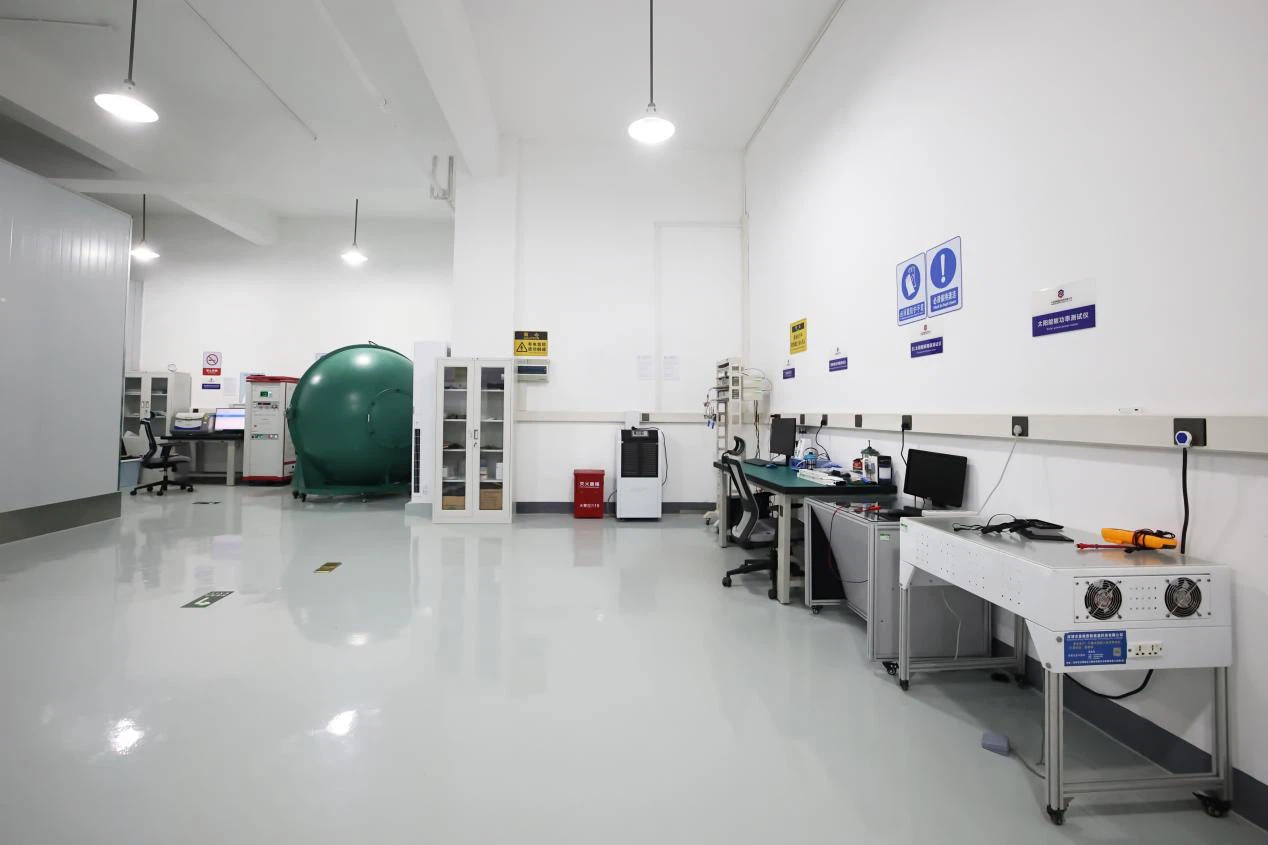
As global compliance requirements for lighting products continue to evolve, Bright Max recently organized an internal quality control training session for newly joined employees. The training focused on inspection standards and common testing procedures used across the company's decorative lighting, solar lighting, work light, and camping light product categories.
Rather than relying only on written materials, the session included hands-on product inspection using actual samples from current production lines. New team members were asked to open and examine products directly, including batteries, PCB boards, LED modules, waterproof sealing structures, and internal wiring connections.
According to the quality control team, understanding how products are built is an important part of understanding how products fail.
Hands-On Inspection Training
The training covered several key inspection areas commonly involved in lighting production and export quality control, including:
- Product appearance and packaging inspection
- Waterproof sealing inspection points
- LED colour temperature consistency checks
- Battery and charging performance basics
- Reading and understanding product specifications
- Common outdoor lighting failure problems
During the session, employees also reviewed examples of products that had previously failed inspection or compliance testing.
One example discussed during the training involved RoHS compliance failures caused by solder materials containing excessive lead content.
According to the quality control team, this type of issue is often difficult to identify through appearance inspection alone.
In some cases, products may look completely normal during assembly and function testing, but later fail European compliance testing because non-compliant solder materials were used during production.
For products exported to Europe, this can lead to shipment delays, failed testing reports, or customs-related issues.
Understanding Long-Term Product Performance
Part of the discussion focused on the difference between short-term functionality and long-term outdoor reliability.
The team reviewed several common issues found in outdoor and solar decorative lighting products, including:
Battery capacity degradation after repeated charging cycles
Waterproof seal aging after prolonged humidity exposure
LED colour inconsistency over time
Material yellowing caused by UV exposure
According to the training team, many of these problems do not appear immediately during production inspection. Some only become visible after products have been used outdoors for several months.
For this reason, the company places increasing emphasis not only on final inspection, but also on understanding how component quality affects long-term field performance.
Quality Awareness Across Departments
Bright Max's management team also emphasized that quality control is not limited to the QC department alone.
As part of the onboarding process, newly joined employees completed a written assessment after the training to evaluate their understanding of inspection procedures and common quality risks.
Over the coming weeks, team members will continue participating in supervised inspection work alongside experienced QC staff.
With over 15 years of experience in the lighting industry, Bright Max continues to invest in internal quality training, product evaluation processes, and standardized inspection systems to support long-term product consistency across global markets.